Silyl cations?


It is not only the non-classical norbornyl cation that has proved controversial in the past. A colleague mentioned at lunch (thanks Paul!) that tri-coordinate group 14 cations such as R3Si+ have also had an interesting history.[1] Here I take a brief look at some of these systems.
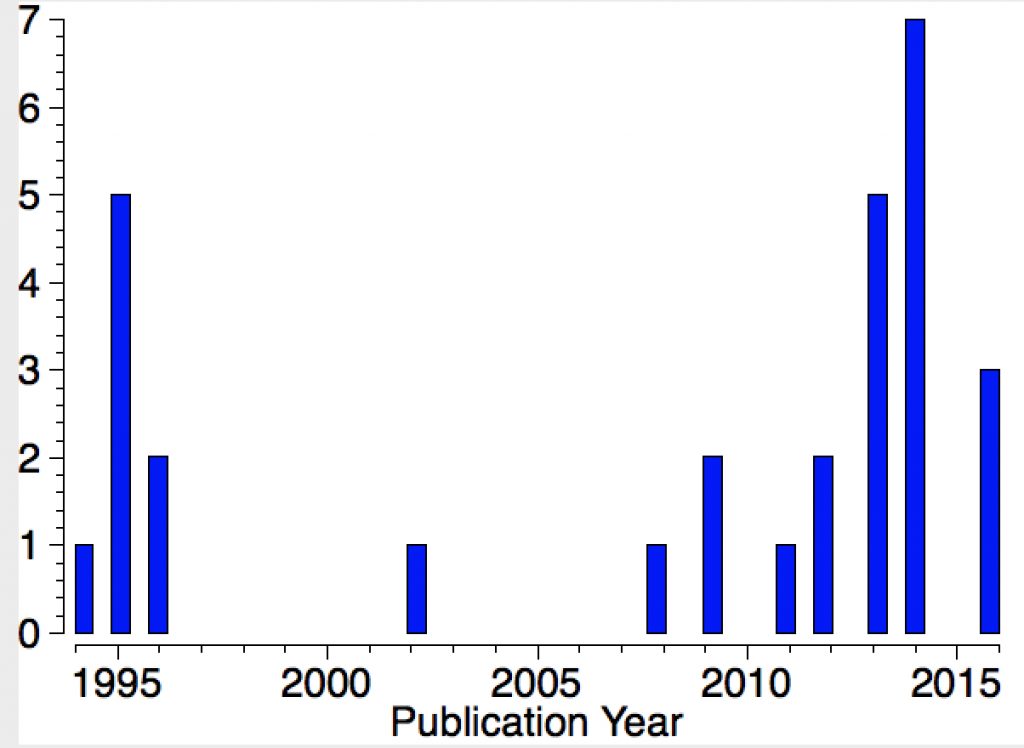
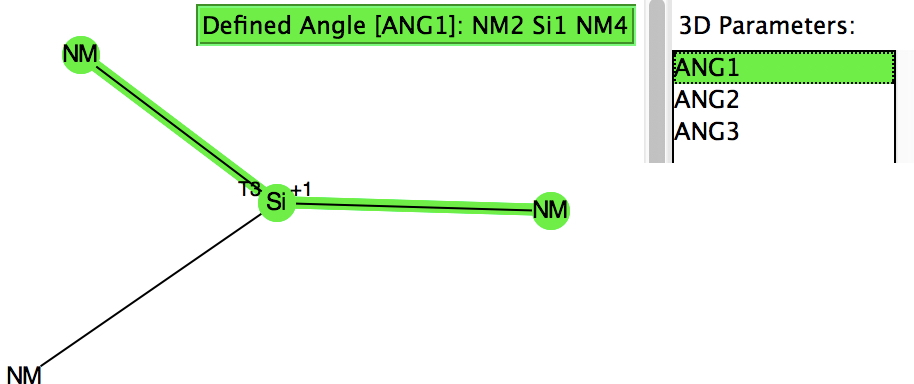
Their initial characterisations, as with the carbon analogues, was by 29Si NMR. The first (of around 25) crystal structures appeared in 1994 (below) and they continue to fascinate to this day. I decided to focus on searching the Cambridge structure database (CSD), using the search query shown below (NM = non-metal). For a planar system the three angles subtended at the Si would of course total to 360°.
The first such structure, published in 1994[2] is shown in 2D representation below
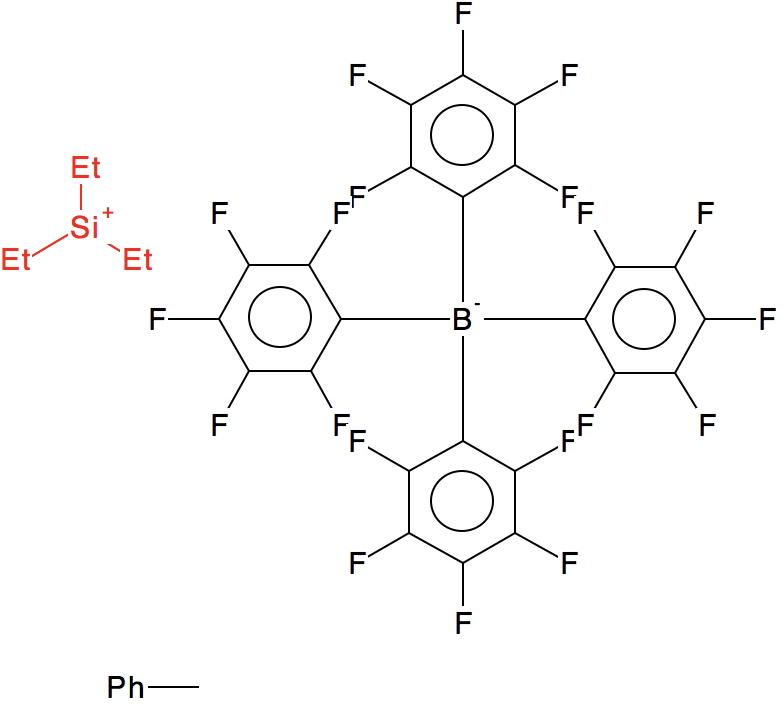
However, the three angles subtended at the Si are 113, 115 and 114°. Could it be that these types of cation are not planar but pyramidal (a ωB97XD/Def2-TZVPP calculation of SiH3+ certainly gives it as planar). Below is a plot of the three angles:
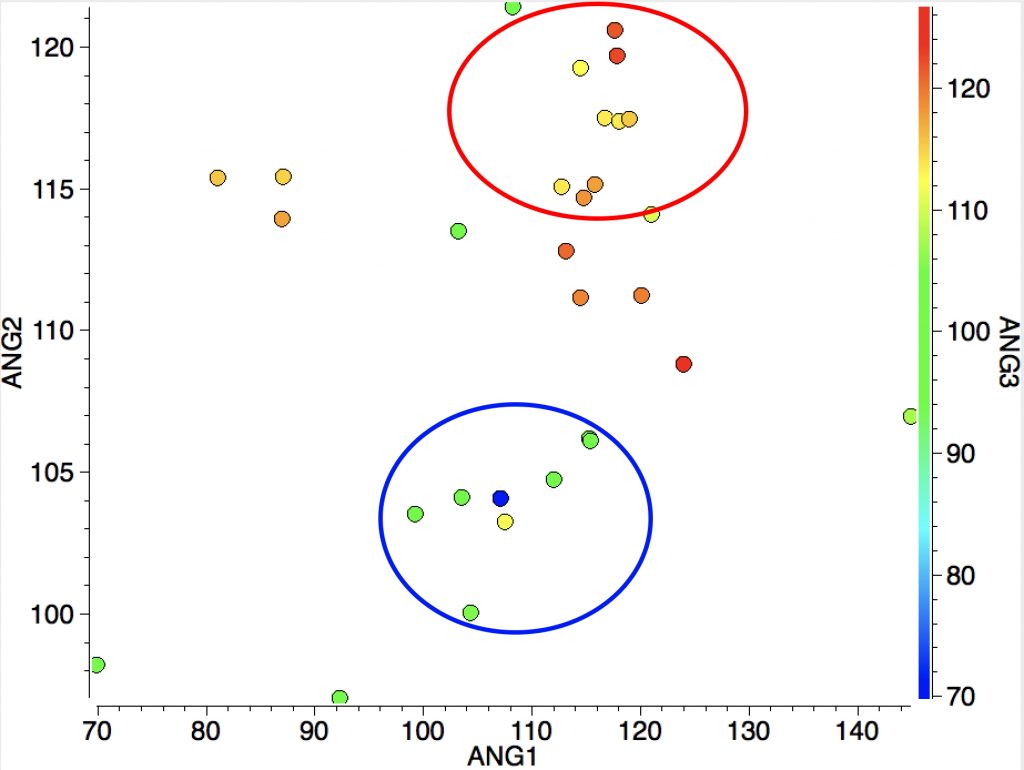
Ringed in red are two systems where all three angles are ~120° (the ones with red dots). The blue circle contains examples where all three angles are <110°. So I took a closer look at the first of these published[2] and known by the code HAGCIB10 (angles of 113, 115 and 114°). The Si appears to be connected to a toluene present in the crystals via an Si-C bond (blue arrow). If correct, that would account for the angles around Si being <120° and indeed closer to tetrahedral, but it would also mean that the species was actually an arenium cation, otherwise known as a “Wheland intermediate”. That extra bond means that it is not a tri-coordinate silicon, but a four-coordinate silicon and that perhaps the indexing in the CSD needs correcting (as was done here).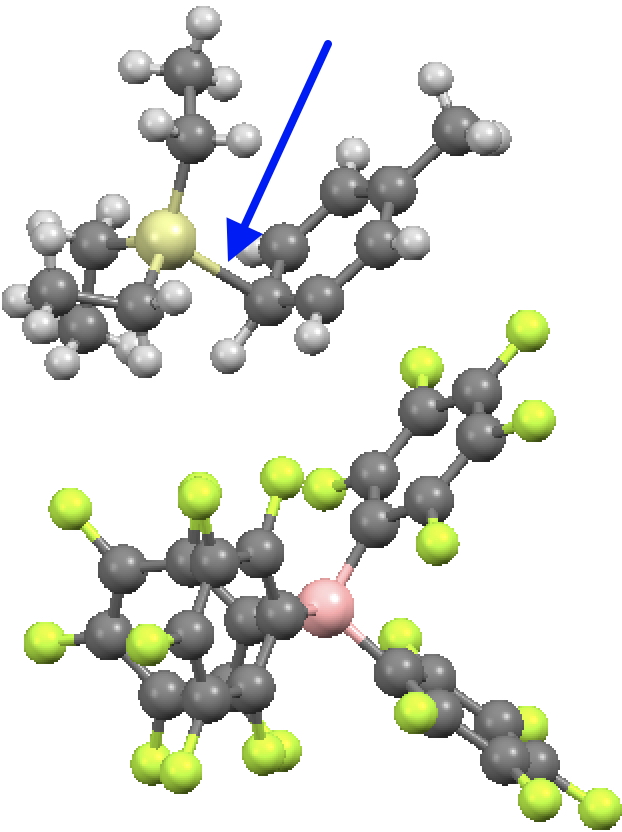
Looking further, quite a few of the 25 examples contain so-called “N-heterocyclic carbene” ligands, as below (DOI for 3D model: 10.5517/CC12FWM0[3]).
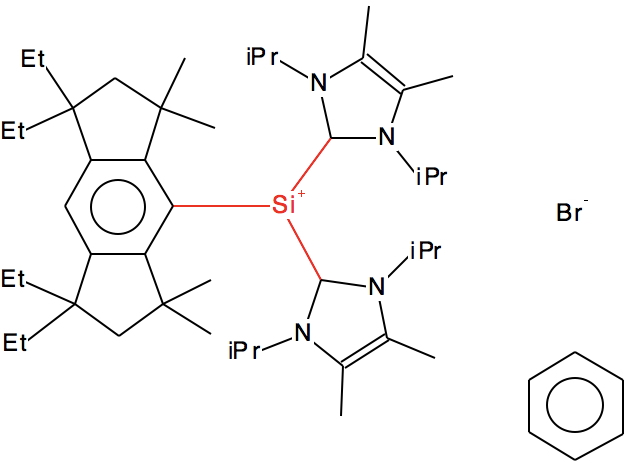
Again one might question the location of the formal +ve charge. Perhaps it might instead reside on the nitrogen as per below, in which case we again do not have a true tri-coordinate silicon cation for systems with such ligands.
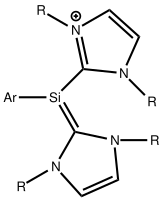 This cannot be the whole story, although I would note that Si=C bonds can contain pyramidalised Si. The bonding clearly needs more investigation!
Very probably each of the 25 examples identified by this search as a silylium or silyl cation has its own story to tell. But in unravelling these stories, one should always perhaps take the 2D representations shown in both the CSD and the original publications with a pinch of salt until other possibly better representations such as the one above are excluded.
References
- J.B. Lambert, Y. Zhao, H. Wu, W.C. Tse, and B. Kuhlmann, "The Allyl Leaving Group Approach to Tricoordinate Silyl, Germyl, and Stannyl Cations", Journal of the American Chemical Society, vol. 121, pp. 5001-5008, 1999. https://doi.org/10.1021/ja990389u
- J.B. Lambert, S. Zhang, and S.M. Ciro, "Silyl Cations in the Solid and in Solution", Organometallics, vol. 13, pp. 2430-2443, 1994. https://doi.org/10.1021/om00018a041
- T. Agou, N. Hayakawa, T. Sasamori, T. Matsuo, D. Hashizume, and N. Tokitoh, "Reactions of Diaryldibromodisilenes with N‐Heterocyclic Carbenes: Formation of Formal Bis‐NHC Adducts of Silyliumylidene Cations", Chemistry – A European Journal, vol. 20, pp. 9246-9249, 2014. https://doi.org/10.1002/chem.201403083
Additional details
Description
It is not only the non-classical norbornyl cation that has proved controversial in the past. A colleague mentioned at lunch (thanks Paul!) that tri-coordinate group 14 cations such as R3Si+ have also had an interesting history. Here I take a brief look at some of these systems.
Identifiers
- GUID
- http://www.ch.imperial.ac.uk/rzepa/blog/?p=17805
- URL
- https://www.ch.ic.ac.uk/rzepa/blog/?p=17805
Dates
- Issued
-
2017-03-23T15:18:14Z
- Updated
-
2017-03-26T07:00:54Z
References
- Lambert, J. B., Zhao, Y., Wu, H., Tse, W. C.& Kuhlmann, B. (1999). The Allyl Leaving Group Approach to Tricoordinate Silyl, Germyl, and Stannyl Cations. Journal of the American Chemical Society, 121(21), 5001–5008. https://doi.org/10.1021/ja990389u
- Lambert, J. B., Zhang, S.& Ciro, S. M. (1994). Silyl Cations in the Solid and in Solution. Organometallics, 13(6), 2430–2443. https://doi.org/10.1021/om00018a041
- Agou, T., Hayakawa, N., Sasamori, T., Matsuo, T., Hashizume, D.& Tokitoh, N. (2014). Reactions of Diaryldibromodisilenes with N‐Heterocyclic Carbenes: Formation of Formal Bis‐NHC Adducts of Silyliumylidene Cations. Chemistry – A European Journal, 20(30), 9246–9249. https://doi.org/10.1002/chem.201403083