
JAN BAEDKE
THE ORGANISM
REVIEWED BY
Matthew Sims
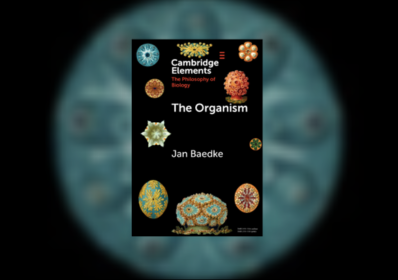
The Organism ◳
Jan Baedke
Cambridge University Press, 2025, £55 / £18 / OA
ISBN 9781009495059 / 9781009495066 / 9781009495035
Cite as:
Sims, M. (2026). 'Jan Baedke’s The Organism', BJPS Review of Books, 2026,
doi.org/10.59350/wk9hn-mf387

As evolutionary biology has developed into a multifaceted discipline over the last two centuries, various specialist sub-domains have focused on different biological entities serving as units of analysis in evolution, ranging across molecules, populations, and ecosystems. With this broadening purview, one question of paramount importance arises: what is the primary conceptual target of biological explanation?
One entity whose prominence has oscillated dramatically is the organism—rising to primacy in the 1700s, becoming peripheral in the mid-to-late 1900s, and experiencing what has been described by some philosophers as a comeback over the last two to three decades. The first part of Baedke's concise book takes the reader on a historical tour of this oscillation, articulating with remarkable clarity the central contextual factors that influenced the rise and fall of the organism as the primary explanatory concept in biology and philosophy of biology, and importantly, the factors leading to what has been termed 'the return of the organism'.
Baedke provides a stellar example of integrated history and philosophy of science, bringing historical developments surrounding the organism concept into sharp relief and drawing from them to develop a rich conceptual analysis. He convincingly argues that the organism represents a central concept linking other important biological concepts paramount to biological theory. He then introduces two challenges involving the concept of the organism that he argues have been unsatisfactorily addressed by early-twentieth-century theorists (organicists and holists) as well as contemporary biological theoreticians (organizational theorists and evo-devo practitioners), whose solutions either fail to distinguish organisms from organismal parts or from the organismal environment.
In the remainder of the book, Baedke sketches his proposed solutions to both challenges, showing how they avoid previous pitfalls. This is where the rubber meets the road, particularly his suggestion regarding what makes organisms unique in organizational explanations. In the final section, Baedke turns to the socio-anthropological relevance of the organism concept, arguing that organism–environment interactions—despite providing more scientifically accurate explanations of phenotypes than genetic determinism—is not immune to promoting racist ideologies.
With the return of the organism as the primary explanatory concept in developmental evolutionary biology, this book provides valuable framing that marries careful historical analysis with rigorous philosophical innovation. Although those familiar with contemporary evo-devo research may find some parts less informative, Baedke's larger argument and his weaving together of conceptual history and contemporary biological theory is a masterclass in historically informed philosophy of biology.
The introduction focuses on deep tensions in current biology regarding the organism's role. Whereas twentieth-century biology was largely gene-centred, more recent developments falling under the evo-devo umbrella—niche construction, microbiome research, plasticity-driven evolutionary hypotheses, and epigenetics—have pulled in the opposite direction, granting the organism a central explanatory role. This chapter outlines the three substantive questions that the book addresses: Which historical theories have championed the organism as biology's primary explanatory unit, and what insights do they offer? Which conceptualization of the organism can ground biological theory, and what challenges does this face? How does organism-centred biology reshape our understanding of human nature?
Chapter 2 presents a historical survey starting with vitalist G. E. Stahl’s coining of the term 'organism' in 1684, moving through the organizational conception of botanist H. Boerhaave and its development in Kantian philosophy in the nineteenth century, and on to Jakob Von Uexküll’s relational conception in the early twentieth century. During this historical journey, different auxiliary concepts associated with the organism and its organizational and relational dimensions come into focus: life, self-organization, parthood, intrinsic purposiveness, reproduction, evolutionary concepts, ecological concepts, and symbiosis. The organism's nature as a 'nexus concept'—an interface between these various auxiliary concepts and their epistemic and ontological aspects—reveals both its fruitful versatility in biological research and its capacity to generate confusion as to what it refers. The survey ends with the 'eclipse of the organism' during the twentieth century, exemplified by the biology of figures including Ernest Nagel, Douglas Falconer, and Ernst Mayr—all of whom Baedke classifies as gene-centred biologists. Despite covering three centuries, Baedke's historical portrayal is careful and commendable, with his structured conceptual framework standing out as both philosophically powerful and useful.
Chapter 3, by far the longest chapter of the book, describes the organism's return and the recent biological developments spurring philosophers and biologists to once again view it as central to biological explanation. Together with post-genomic research emphasizing multifactorial causal interplay between genome, environment, and developmental factors, Baedke argues that theoretical developments of the last thirty years—epigenetics, phenotypic plasticity, niche construction, microbiome research, and (eco-)evo-devo—have brought the organism back to centre stage. Illustrative empirical examples bring this point home, including a fascinating flour beetle experiment demonstrating genetic effects of niche construction across generations.
The chapter introduces how the organism's return through evo-devo has brought increasing interest in biological individuality. Biological individuals represent mediating concepts (evolutionary individuals, immunological individuals, metabolic individuals) connecting the interrelated web of auxiliary concepts, in the centre of which sits the organism. Additionally, there is renewed interest in the notions of biological agency, teleology, and self-organization as both effect and part of the organism's return. This chapter introduces the inward and outward challenges accompanying this return. The inward challenge refers to making sense of the 'internal organisation of the organism that constitutes its individuality in contrast to other units in nature' (p. 24). The outward challenge requires one to 'grasp the organism–environment relationship and separate the organism from its environment' (p. 24) despite their deep reciprocal causal interlinking.
One notable absence in this discussion is critical engagement with controversies surrounding these research findings. While transgenerational epigenetic inheritance in plants and nematodes is widely accepted, in other animals it remains contentious due to germline sequestration, despite recent findings in mice and rats. Similarly, the phenotype-first hypothesis remains controversial. Flagging this pushback—even in footnotes—would have strengthened the case for the organism's return, particularly for readers uncommitted to evo-devo's centrality.
After examining the history of how organicists recognized these challenges, chapter 4 analyses why attempts to address them have thus far failed. Addressing the inward challenge through self-maintenance as the organismal organizational principle prove unsatisfactory because persistence is not organizationally unique to organisms. Many biological units persist (eusocial colonies, ecosystems, symbiotic associations). Moreover, persistence forecloses on 'creative teleological processes directed toward transcending mere maintenance of biological systems' (p. 33). Solutions to the outward challenge are also wanting. For instance, some biologists and philosophers have proposed that the organism and environment ontologically co-constitute one another, something that occurs through diachronic reciprocal causal influence. In following this suggestion through, Baedke argues, something unfortunate occurs: the boundary that separates the organism from the environment is lost, and with it the organism's explanatory role in various biological phenomena also disappears.
The chapter's remainder sketches a theoretical framework offering novel solutions. Baedke suggests that beyond persistence, organisms are uniquely 'overcomers' (p. 39)—able to destabilize their organization, often challenging their own persistence, then re-organizing creatively to open new evolutionary platforms. He provides three striking examples: adaptive immune system modification in deep-sea anglerfish during mating; self-severing sea slugs that regrow bodies via photosynthetic algae symbionts; and reversible morphological transformation in jumping ants to create replacement 'pseudo' queens.
Despite Baedke's sharp eye for biological detail, I found the claim that non-organismal entities lack destabilization and reorganization capacities questionable. Individual immune cells regularly modulate their function: T cells differentiate into regulatory phenotypes, macrophages switch between pro- and anti-inflammatory states, B cells undergo class switching. These represent cellular 'tinkering' with organization in response to environmental challenges. The placenta actively produces factors reshaping maternal immunity. If only organisms possess destabilization abilities, Baedke must explain why self-modification capacities of cells, tissues, and organs don't count as comparable adaptive reorganization.
These cases may show that destabilization and reorganization occur at multiple biological levels, not exclusively at the organismal level. Without clearer criteria distinguishing organismal agency from component system plasticity, the argument that organisms are special overcomers remains somewhat underdeveloped. That said, Baedke acknowledges that he is sketching a solution and, in doing so, he is raising deep questions about organismal organization.
Baedke's response to the outward challenge presents a conceptual and visual model emphasizing the interlinking causal pathways from organisms to environments, and how different interlinking causal patterns unfold over time. This model helps make sense of various organism–environment reciprocal causal interaction patterns involved in different niche-construction types without losing the organism to co-constitution. While I was less convinced about the inward problem's solution, this outward problem solution is extremely compelling. I was slightly puzzled, however, by the application of this model to cows, rumen, and bacteria. The model treats the rumen as distinct from the host—the cow—but this seems problematic: the rumen is part of the cow; so, for the bacteria, their environment and their host are one and the same.
Chapter 5 explores how the organism concept is deeply intertwined with human self-understanding and social thought, functioning as a bridge between biological and social realms, and serving as a model for understanding human individuality, freedom, and social order. Central themes include freedom or self-determination and the persistent entanglement of biological thinking with race and racism. The chapter traces how the focus on genes and populations in twentieth-century biology fostered deterministic interpretations, acting as justification for social inequalities and atrocities. However, post-genomic sciences now understand organisms as dynamic entities embedded in social and environmental contexts, challenging genetic determinism and introducing developmental plasticity and autonomy. Yet these developments risk creating new forms of post-genomic or environmental determinism, where social and maternal environments are blamed for health outcomes and negative intergenerational effects.
This chapter also examines how post-genomic perspectives have reshaped but not erased the biological notion of race. Rather than being grounded in genes, racial differences are increasingly interpreted as environmentally embodied through microbiomes or epigenetic markers. While such research aims to address health disparities, it often reproduces racialized thinking under new guises. Baedke offers a warning worth heeding. Just as early twentieth-century organismic biology aligned with exclusionary ideologies, today's biosocial frameworks risk repeating these patterns unless their socio-political implications are critically examined.
Despite its brevity, Baedke's book is richly filled with thought-provoking examples and philosophical rigour. It is essential reading both for those newly intrigued by the organism concept in biology and its historical trajectory, and for organism-seasoned biologists and philosophers who would benefit from considering Baedke's conceptual framework. Has there been a return of the organism? Without a doubt.
Matthew Sims
University of Cambridge
ms3174@cam.ac.uk
 https://i0.wp.com/www.thebsps.org/wp-content/uploads/2026/04/Thumb-Clarke-on-Northcott.png?fit=398%2C280&ssl=1
280
398
The BJPS
http://www.thebsps.org/wp-content/uploads/2015/06/BSPS-blue.gif
The BJPS2026-04-28 07:00:572026-05-11 17:36:59Robert Northcott, Science for a Fragile World
https://i0.wp.com/www.thebsps.org/wp-content/uploads/2026/04/Thumb-Clarke-on-Northcott.png?fit=398%2C280&ssl=1
280
398
The BJPS
http://www.thebsps.org/wp-content/uploads/2015/06/BSPS-blue.gif
The BJPS2026-04-28 07:00:572026-05-11 17:36:59Robert Northcott, Science for a Fragile World https://i0.wp.com/www.thebsps.org/wp-content/uploads/2025/12/Thumb-Dupre.png?fit=398%2C280&ssl=1
280
398
The BJPS
http://www.thebsps.org/wp-content/uploads/2015/06/BSPS-blue.gif
The BJPS2026-04-21 07:00:542026-05-11 17:36:50Ellen Clarke, The Units of Life
https://i0.wp.com/www.thebsps.org/wp-content/uploads/2025/12/Thumb-Dupre.png?fit=398%2C280&ssl=1
280
398
The BJPS
http://www.thebsps.org/wp-content/uploads/2015/06/BSPS-blue.gif
The BJPS2026-04-21 07:00:542026-05-11 17:36:50Ellen Clarke, The Units of Life https://i0.wp.com/www.thebsps.org/wp-content/uploads/2025/12/Thumbnail-Orlandi.png?fit=398%2C280&ssl=1
280
398
The BJPS
http://www.thebsps.org/wp-content/uploads/2015/06/BSPS-blue.gif
The BJPS2026-04-14 07:00:052026-05-11 17:36:41Frances Egan, Deflating Mental Representation
https://i0.wp.com/www.thebsps.org/wp-content/uploads/2025/12/Thumbnail-Orlandi.png?fit=398%2C280&ssl=1
280
398
The BJPS
http://www.thebsps.org/wp-content/uploads/2015/06/BSPS-blue.gif
The BJPS2026-04-14 07:00:052026-05-11 17:36:41Frances Egan, Deflating Mental Representation